
Data Doesn’t Change Culture. Conversations Do.
Jul 10, 2025
F
Flex Surveys 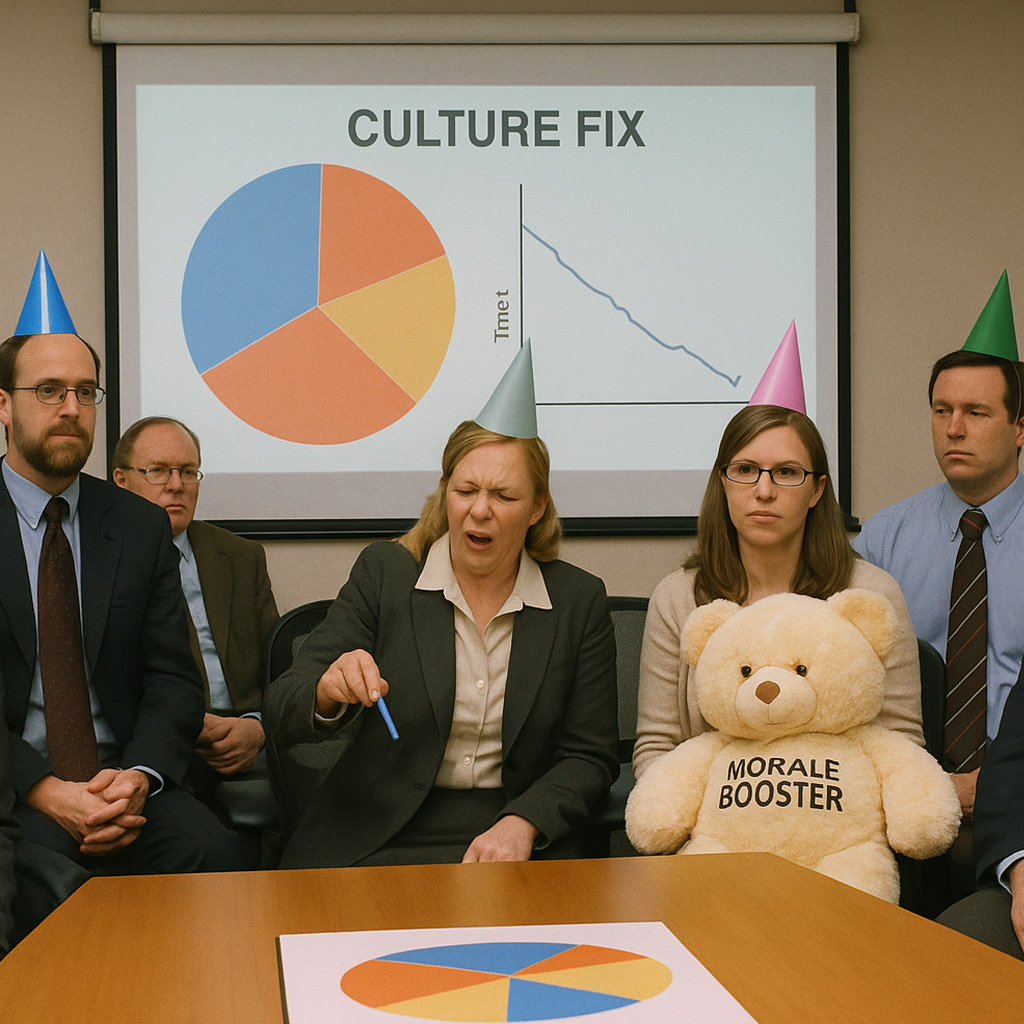
Great cultures aren’t built in dashboards. They’re built in team discussions.
If you’ve ever read a survey result that made your stomach sink, you’re not alone.
Maybe engagement dipped. Maybe trust felt shaky. Maybe people said they didn’t feel heard. The instinct is to fix. Send out a follow-up. Create a new policy. Launch an initiative. Do something.
But culture isn’t something you fix. It’s something you shape, together. And shaping it doesn’t happen in spreadsheets or dashboards. It happens in conversations.
This is where the real work begins—not when the survey closes, but when the talking starts.
Survey results give you a snapshot. They tell you how people are feeling in a moment. That’s useful. But the real value isn’t in the numbers. It’s in what you do with them.
High-performing teams don’t stop at knowing where they stand. They use that information as a starting point. They create space to talk about it. They ask questions. They listen. They adjust.
This is how culture gets built: not from the top down, but through honest, human conversations.
When leaders review engagement data behind closed doors and move straight to action, something important gets missed.
Employees don’t need leaders to interpret how they feel. They need leaders to ask.
They need space to talk about why they answered the way they did. What’s working. What’s frustrating. What would help.
Skipping this step sends a message—even if you don’t mean to. It says, “We asked, but we’re not really listening.”
Over time, that can do more harm than good. People stop being honest in surveys. Trust erodes. The numbers lose meaning.
The good news? It’s not hard to turn this around. It starts with making space to talk.
You don’t need to be a master facilitator. But you do need to be intentional. Here’s how to lead conversations that actually move things forward.
Open the conversation with clarity and humility. Let your team know the goal is to understand the results together, not to explain them away or assign blame.
You might say:
“Thanks for sharing your feedback. I’ve gone through the survey results and I’d love to hear more from you. I want us to talk about what’s behind the scores, what’s going well, and where we can improve as a team.”
This creates a safer space from the start.
It’s normal to feel a little defensive if the feedback stings. But the best thing you can do as a manager or leader is stay curious.
If someone says they feel disconnected, don’t jump in with a counterpoint. Ask what that looks like for them. Ask what a stronger connection would feel like.
This isn’t about agreeing with every piece of feedback. It’s about understanding it.
Resist the urge to present a summary and ask for questions at the end. That often leads to silence.
Instead, structure the conversation with open prompts. For example:
“What stood out to you in the results?”
“Did anything surprise you?”
“What’s something small we could do that would make a real difference?”
Let the conversation breathe. Silence is okay. So is emotion.
Avoid vague summaries like “we need more communication.” Ask for examples. When did communication feel strong? When did it feel confusing or unclear?
The more specific the feedback, the more actionable it becomes.
You won’t be able to fix everything. Be honest about that. The goal isn’t to make every problem disappear overnight. It’s to build a culture where people feel safe raising concerns and confident that their voice matters.
For managers: You’re the front line of culture. That doesn’t mean you need all the answers. It means your willingness to engage in real conversations sets the tone for your team.
If you’re not sure how to start, ask your HR team for support. Use simple prompts. Let your team know you’re listening.
For HR leaders: Your role is to help managers feel equipped, not overwhelmed. That could mean:
Sharing conversation guides or templates. Creating space for managers to talk through their team results with peers. Hosting office hours for support. Encouraging a “progress over perfection” mindset.
Don’t turn survey follow-ups into compliance exercises. Focus on connection.
When you prioritize conversation, it’s worth tracking what happens next.
You don’t need to boil it down to numbers alone. Instead, look for signals that things are shifting:
Are managers reporting more open conversations with their teams? Are employees referencing past discussions in one-on-ones? Are previously low-scoring areas beginning to shift over time?
You can also revisit the same questions from your original survey in pulse surveys or team check-ins. Ask people how they’re feeling about progress. Ask if things feel different.
What you’re really measuring is trust. And trust builds slowly, through consistent follow-through.
Even with the best intentions, post-survey follow-ups can stall. Here are a few traps to watch for—and how to steer clear.
It’s easy to ask the most engaged people what they think. But make sure you’re hearing from a mix of voices. Sometimes the most valuable insights come from the quietest corners.
Culture doesn’t change because of one conversation. Build feedback into the rhythm of work. Use regular one-on-ones, team retros, and check-ins to keep the dialogue going.
You don’t need everyone to agree before you act. If you see a strong theme, start there. Make one change, then check back in.
You don’t need a fully built action plan before you start talking. Conversations are the action. Start small, and build from there.
The most powerful thing you can do after a survey isn’t to share a slide deck. It’s to say, “Let’s talk about it.”
That’s what makes people feel seen. That’s what builds trust. That’s what turns feedback into a force for good.
Culture lives in what we do, not what we measure. So measure well—but then go further. Make it a habit to ask. Make it safe to speak. Make it easy to listen.
That’s where the change really begins.
Create your own employee engagement survey for almost anything.
A comprehensive suite of survey and insight solutions.