Can AI Actually Make Work More Human?
Jul 17, 2025
F
Flex Surveys 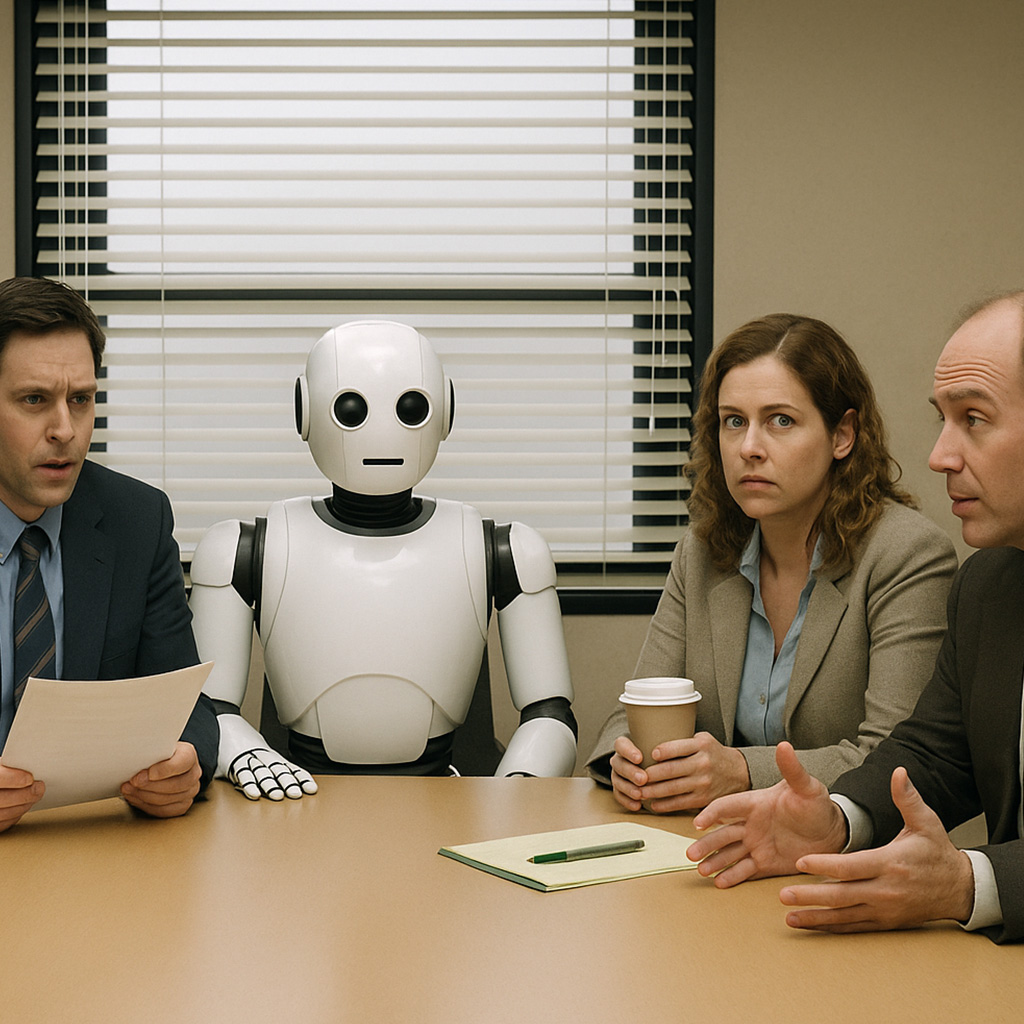
Ask ten people what they think about AI in the workplace and you’ll get ten very different answers.
Some picture a dystopian future where jobs are replaced, creativity dries up, and everyone becomes a cog in a machine run by algorithms. Others imagine a productivity utopia, where AI assistants anticipate every need, automate the boring stuff, and free people up for “deep work” and big ideas.
Both visions miss the more nuanced truth.
The question worth asking isn’t whether AI will replace work. It’s whether AI can make work feel more human.
That might sound like a contradiction. But for many teams, the goal isn’t to make everything faster. It’s to make work more thoughtful, less exhausting, and more connected. If AI can help with that, it deserves a seat at the table.
Work is full of tiny moments that chip away at people’s time, focus, and energy. Finding the right doc. Updating the same status in four places. Chasing someone for approval. Sitting through another 12-person meeting to share three bullet points that could have been emailed.
None of this is the “human” part of work. It’s the friction.
AI can help remove some of that friction. Not in a magical, one-click kind of way. But in small, practical ways that add up.
A recruiter uses AI to summarize hundreds of resumes and highlight best-fit candidates. A marketing team uses AI to rewrite internal updates in clear, digestible language. A manager uses AI to draft talking points for a performance review, based on peer feedback and notes.
In all of these cases, the person is still doing the thinking. They’re just starting with more clarity and less busywork.
It’s not about doing less. It’s about doing what matters more.
There’s a myth that creativity is sacred and AI has no place in it. But anyone who’s done creative work knows that most of it isn’t magic. It’s messy drafts, research, iteration, feedback, and revisions.
AI doesn’t kill creativity. It gives it momentum.
Writers use AI to jumpstart drafts. Designers use it to test layouts or explore different visual directions. Brainstorming with AI isn’t that different from brainstorming with a teammate—it helps get the ideas flowing.
And often, those first ideas aren’t the best ones. But they’re a place to start. Which, when you’re staring at a blank page, is half the battle.
If you manage people, you know how emotionally demanding it can be. You’re expected to coach, motivate, resolve tension, and notice when someone seems off—all while hitting your own deadlines.
AI can’t replace emotional intelligence. But it can give managers better tools to show up for their teams.
For example:
A sentiment analysis tool flags that team feedback is trending more negative than usual. An AI assistant drafts a check-in plan based on someone’s recent performance notes and survey responses. A people team uses AI to sift through engagement survey results and spot patterns before they escalate.
This doesn’t remove the human part. It gives people a starting point to act with more empathy and less guesswork.
Of course, there’s a limit to where AI helps.
When organizations try to automate empathy or replace human judgment with algorithms, things go sideways. No one wants to be told by a chatbot that they’re being let go. Or receive a robotic auto-response when they’re struggling with burnout.
The most human moments at work—offering support, making space for feedback, navigating disagreement—can’t be outsourced. AI can help frame them, but it can’t deliver them.
There’s also the risk of over-automating to the point where people feel surveilled. Not every conversation needs to be analyzed. Not every message needs a sentiment score. When tools are misused, it doesn’t create connection. It creates paranoia.
This is where intention matters. AI should be used to empower people, not monitor them.
What’s interesting is how AI is pushing teams to be more intentional.
Instead of defaulting to meetings, they’re asking: Can this be async? Instead of manually compiling reports, they’re asking: Can this be automated so we can focus on the insights?
People are starting to redesign the flow of work, not just the outputs.
And that’s where things get more human. Because when you remove the unnecessary stuff, what’s left is the actual work of working together—problem-solving, ideating, building trust, sharing feedback.
The kinds of things people are good at. And the things most people enjoy when they’re not drowning in tasks that don’t make sense.
Making AI work for people—not just productivity—takes a mindset shift.
It means:
Don’t drop tools on people without a conversation. Ask: Where do you lose the most time? What part of your work feels repetitive? Where could a first draft or summary help?
AI is only as good as what it’s trained on. Teach it your tone, your norms, your culture. A generic AI writing assistant won’t sound like your brand unless you show it what good looks like.
Use AI to inform decisions, not make them. Let it surface insights, but leave room for people to weigh in. Especially when stakes are high or context is subtle.
Tell people what tools are being used and why. If AI is being used to flag burnout risk, say so. Don’t hide it behind the scenes. Trust comes from clarity.
AI might speed things up—but speed isn’t always the goal. Instead, measure impact by outcomes like fewer meetings, more thoughtful communication, less rework, or higher team satisfaction.
At its best, AI isn’t here to replace human work. It’s here to clear a path for it.
It removes friction. It saves people from repeating themselves. It makes information more accessible. It creates space for reflection, not just reaction.
And in doing so, it helps teams be more human with one another. Not less.
That means more time for coaching, listening, experimenting, and learning. More bandwidth for creativity and curiosity. More energy at the end of the day.
AI isn’t going to fix your culture. It’s not a shortcut to trust or clarity.
But when used with care, it can remove some of the noise that gets in the way of doing meaningful work.
And that might be the most human outcome of all.
Create your own survey for almost anything.
The most comprehensive solution for all your insight needs